Flat feet and standing work: which shoes get you through the shift?
 Health
Recognising a flat foot
Flat foot is a collapse of the inner arch: the curve that runs from heel to forefoot drops, and more of the sole touches the ground. The footprint you leave on a wet floor is full, without the hollow of a normal foot. The foot also tends to roll inward, which clinicians call pronation.
Two situations need separating. A flexible flat foot keeps an arch at rest or on tiptoe and collapses only under load: the most common form in adults, and the one where footwear helps most. A rigid flat foot stays collapsed in every position and needs medical assessment. This article is about the first.
Why standing work exposes flat feet
Plenty of adults live with flat feet and no real trouble day to day. Prolonged standing is what tips the balance, because it stacks everything that strains an already collapsed arch:
- Volume: 12 to 15 km a day in service, two and a half marathons a week, without an athlete's recovery phases.
- Hard floors: tile, concrete, marble. No absorption, so every step sends the shock into a foot that already spreads it poorly.
- Static standing: standing without walking (front desk, dish station, checkout) keeps the arch under constant tension and tires the muscles that hold it.
- Repeated pronation: with each step the foot rolls inward. Over thousands of steps, that motion pulls on the fascia and ankle tendons and travels up the chain.
The typical result: a tired arch and ankle at the end of service, sometimes heel pain (flat feet are a known ground for plantar fasciitis), and for some a discomfort that climbs to the knee or lower back.
From foot to posture: why the pain moves
When the arch collapses, the leg axis changes. The knee tends to drift inward, the hip compensates, the pelvis adjusts. In occasional use these micro-compensations go unnoticed. Repeated over 15,000 steps a day, they become chronic tension. That is why someone with flat feet sometimes sees a professional about a knee or a back without connecting it to how the foot lands.
What to look for in a shoe for flat feet
A flexible flat foot needs to be supported and stabilised, not just cushioned. Five criteria really matter:
- Genuine arch support: the insole must rise under the inner arch to take part of the load. A flat insole supports nothing and lets the arch collapse at every step.
- A firm heel counter: the back of the shoe must hold the heel straight and limit the inward roll. It is the first line against pronation.
- A torsionally stable sole: the shoe must not twist like a rag through the middle. That midfoot rigidity guides the load instead of following it.
- Cushioning under heel and forefoot: it absorbs the shock a flat foot spreads poorly on hard floors.
- A removable insole and a deep enough fit: essential to hold a custom orthotic if a podiatrist prescribes one, without stealing usable volume.
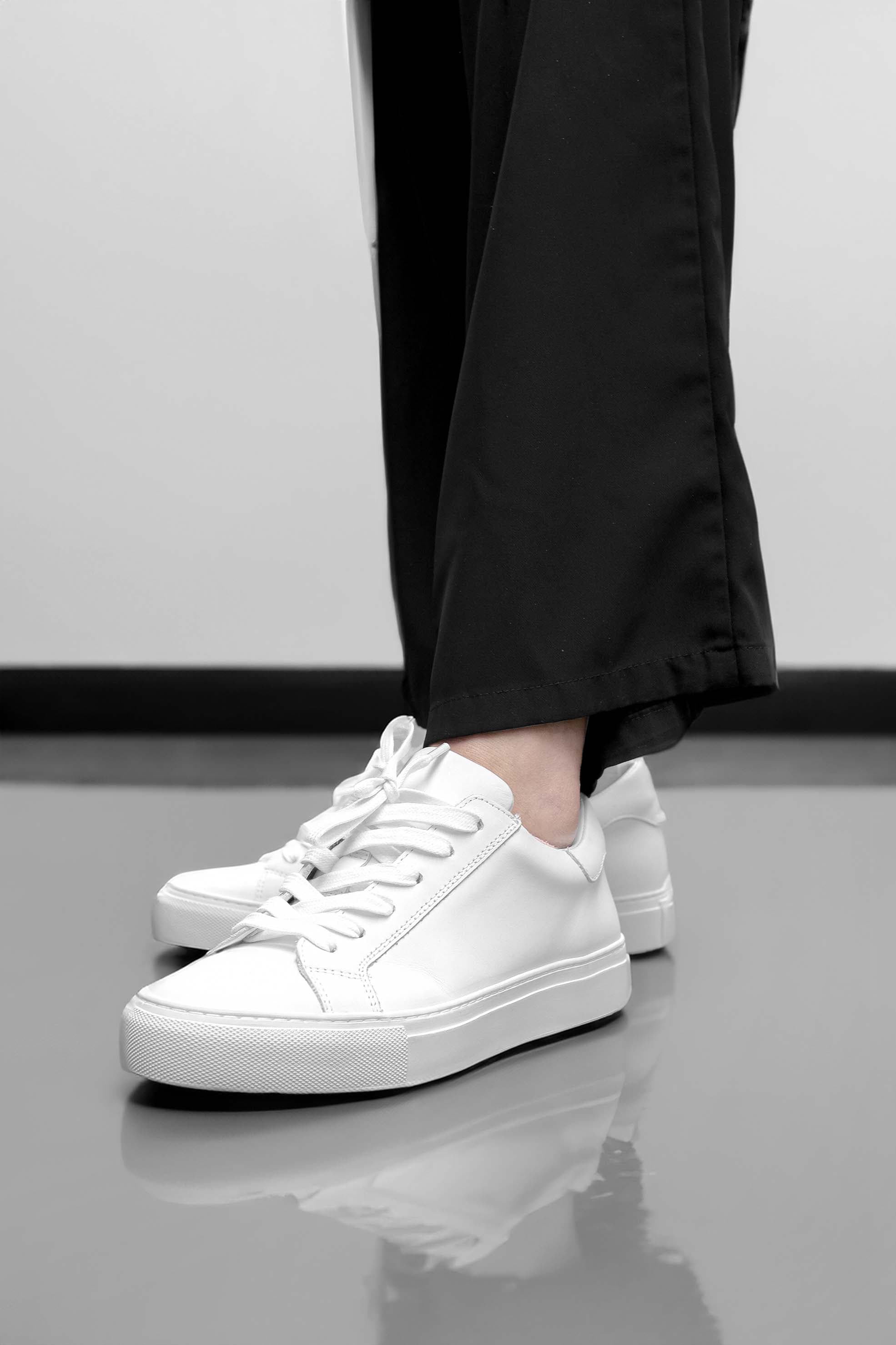
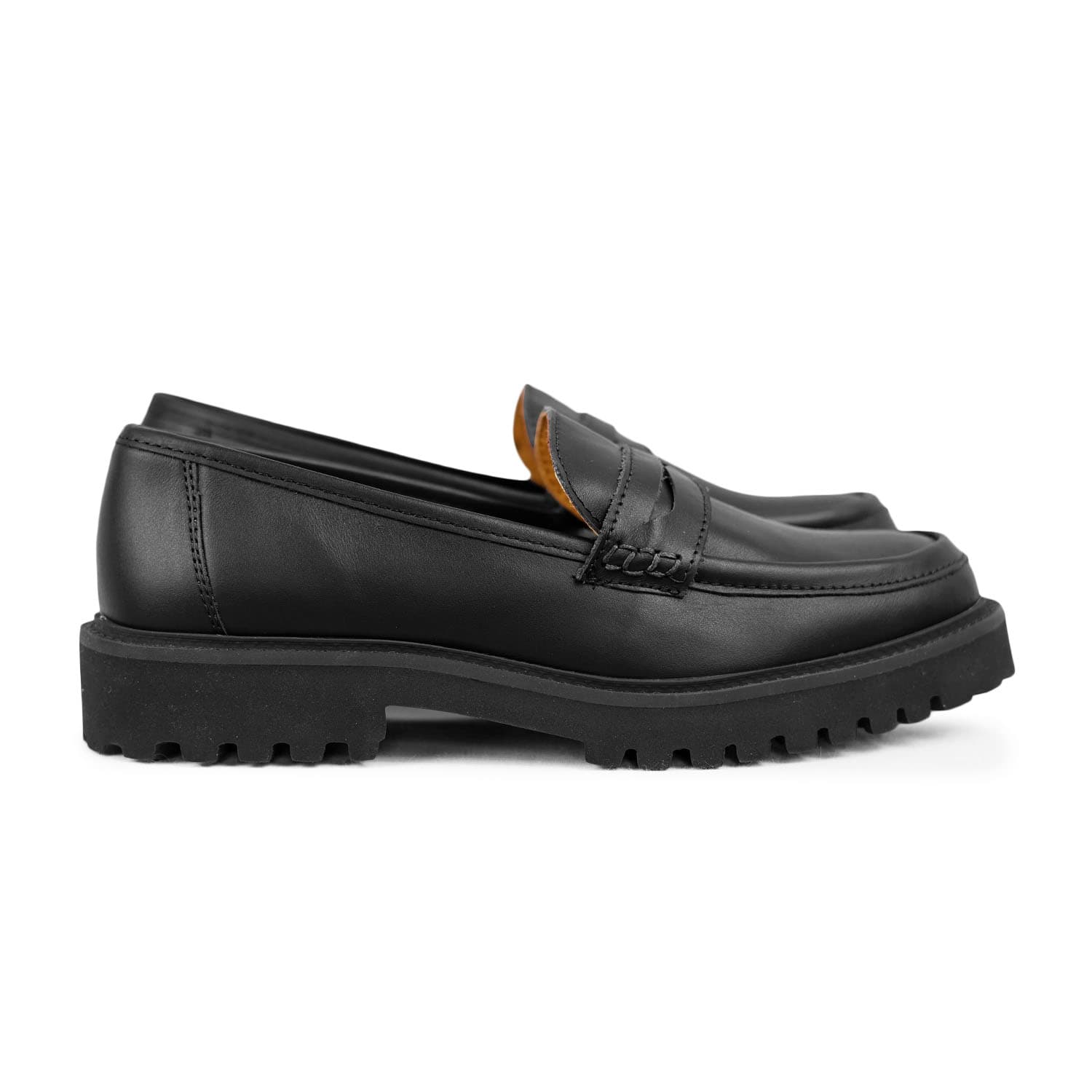
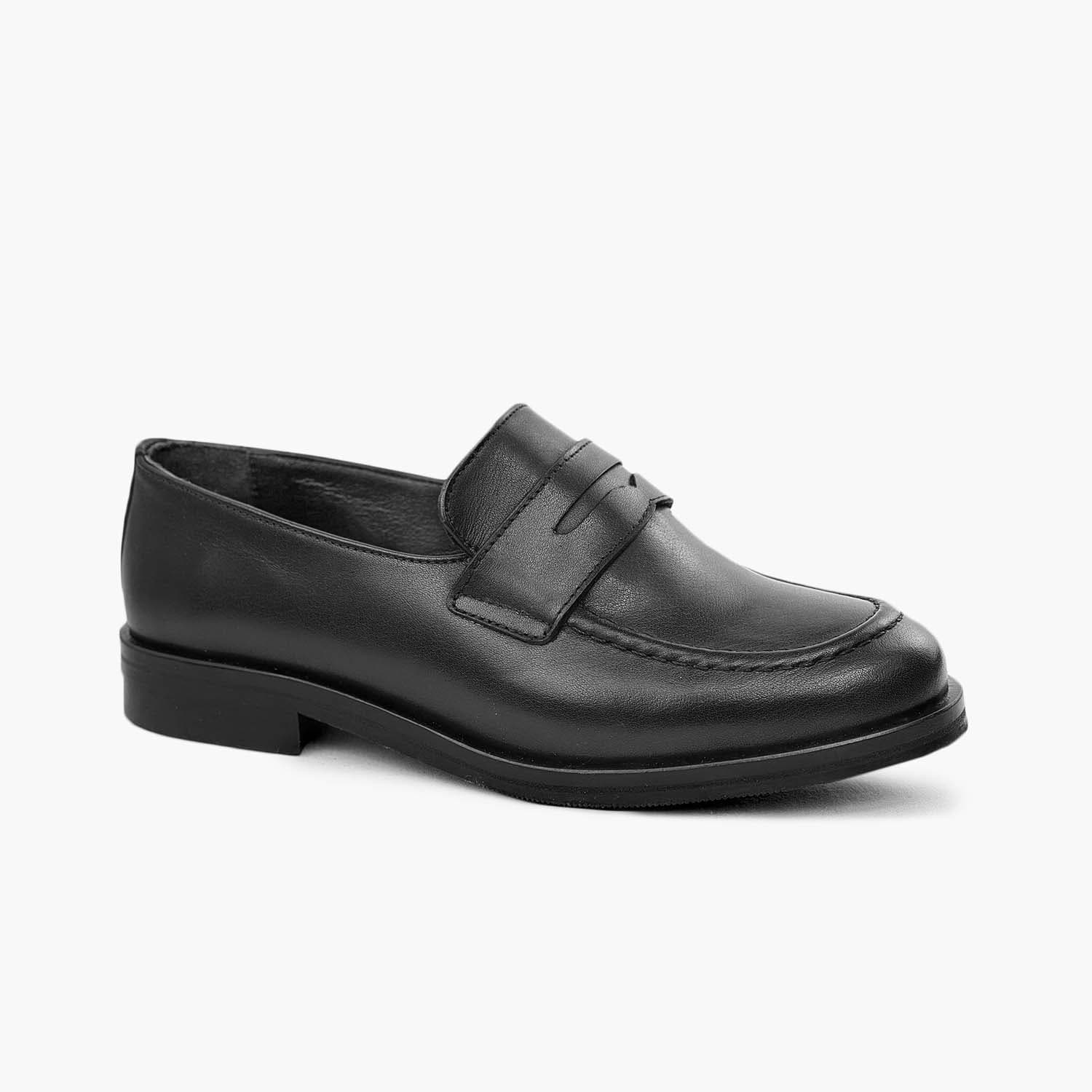
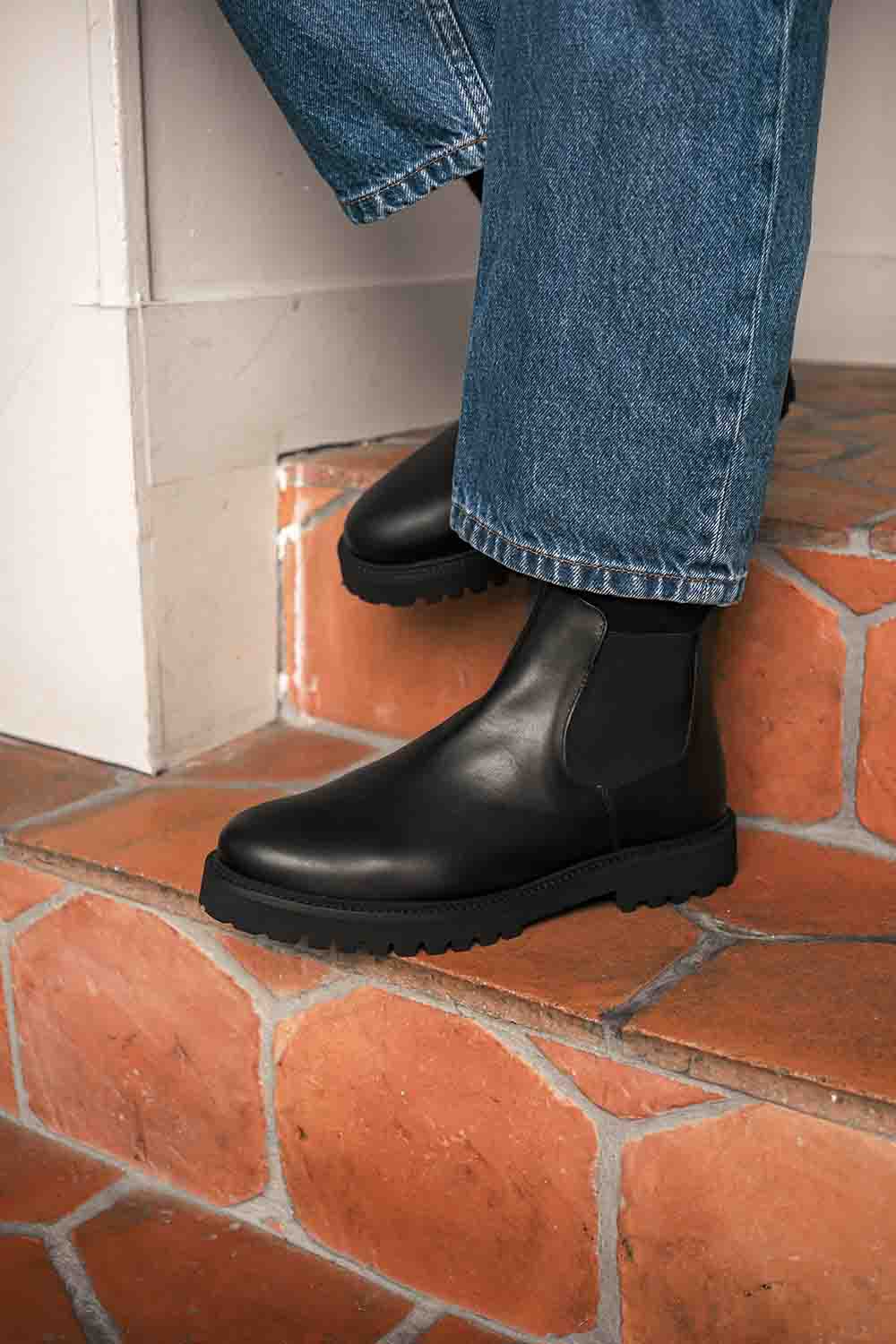
Our models meet that brief because they are built for prolonged standing: full-grain leather from Portugal that holds without pinching, an SRC slip-resistant sole for kitchen and lobby floors, and a removable insole to take an orthotic. One pair is built for 3,000 km, roughly a year of intensive service.
Orthotics: often the real lever
For a flat foot, a custom orthotic is frequently the most effective step: it rebuilds arch support calibrated to your foot and corrects how load is shared. Two practical conditions for it to help at work: a shoe with a removable insole to house it without cramping the foot, and a fit deep enough that the heel stays held once the orthotic is in.
The simple rule: a good work shoe is often enough when the discomfort is moderate and shows up only at the end of the day. Once pain becomes daily or travels up the leg, the podiatrist-prescribed orthotic takes over, and the shoe becomes the support that carries it.
What makes it worse, what helps
- Worse: fully flat, thin insoles, soft shoes that crush at the midfoot, a heel too low to offer any support, and a size taken too large where the foot slides and pronates even more.
- Helps: matched arch support, a firm heel counter, alternating two pairs so the foam recovers, and regular calf stretches, since the calf is often tight in people with flat feet.
- Does not fix: in adults, no shoe or insole durably rebuilds a collapsed arch. The goal is to support, stabilise and remove pain, not to reconstruct the arch.
When to see a professional
Book a podiatrist or your doctor if pain becomes regular, if it comes with ankle swelling, if the flat foot appears on one side only or has set in recently in adulthood, or if the discomfort climbs to the knee and back. In children, flat feet are usually normal and change with growth: the paediatrician or podiatrist decides whether to act. The shoe relieves; the health professional diagnoses and treats.
For employers: an arch not to overlook
On a standing team, several people have flat feet, whether they know it or not. Equipping them with a model that offers no arch support manufactures fatigue and sick leave for musculoskeletal disorders. The cost of a suitable pair compares to a single day of absence.
Our protocol is the same as for all equipment: one test pair in the size of the person concerned, two weeks of real service, then the decision rests on lived experience. From one pair, with no minimum order.
Frequently asked questions
Which shoes are best for flat feet when you work standing?
A shoe with genuine arch support, a firm heel counter, a torsionally stable sole, cushioning under the heel and a removable insole to hold an orthotic. Avoid flat, thin insoles and sizes taken too large, which let the foot slide and roll inward.
Can flat feet cause knee or back pain?
Yes. A collapsed arch changes the leg axis and triggers compensations that travel to the knee, hip and lower back. Over thousands of daily steps, those compensations can become chronic pain, sometimes felt far from the foot itself.
Do you need orthotics if you have flat feet?
Not always. A good work shoe is often enough when the discomfort is moderate and shows up only at the end of the day. Once pain becomes daily, a custom orthotic prescribed by a podiatrist is usually the most effective step, provided the shoe has a removable insole to house it.
Can a shoe correct flat feet?
No, not in adults. No shoe or insole durably rebuilds a collapsed arch. They support, stabilise the load and remove pain, which is enough to get comfortably through a day on your feet. Diagnosis and treatment are the podiatrist's or doctor's domain.