Plantar fasciitis and standing work: which shoes get you through the shift?
 Health
Recognising plantar fasciitis
The most telling sign: first-step pain. You put your foot down in the morning (or after a seated break) and a sharp pain shoots through the heel, sometimes into the arch. It eases after a few minutes of walking, then returns at the end of service, after hours standing on kitchen tile or lobby marble.
The plantar fascia is a fibrous band running from heel to toes, supporting the arch like the string of a bow. Loaded beyond its capacity to recover, it develops micro-tears at its heel insertion. That chronic inflammation is what hurts.
Fasciitis, heel spur: what are we talking about?
Plantar fasciitis and plantar aponeurosis inflammation are the same condition (the fascia is also called the aponeurosis). The heel spur is a small bony growth visible on X-ray in some patients: it is the consequence of chronic traction on the fascia, not the cause of the pain. You can have a spur without pain, and fasciitis without a spur.
Why standing professions are on the front line
- Volume: 12 to 15 km a day in service, without the recovery phases a runner gets.
- Floors: tile, concrete, marble. Zero absorption, every step sends the shock wave into the heel.
- Prolonged static standing: standing without walking keeps the fascia under continuous tension, without the release phases of walking.
- Flat, thin shoes: a uniform ballet flat or a worn-out sneaker, with no arch support or cushioning, leaves the fascia to absorb everything alone.
Add the recognised individual factors: excess weight, flat or very high-arched feet, tight calves, and a sudden return to activity (back from holidays, a new role with more walking).
The footwear criteria that change the game
- Real arch support: the insole must hug the arch to take over part of the fascia's tension. A flat insole supports nothing.
- A cushioned heel: that is the zone that suffers. Effective heel cushioning reduces the shock wave of every step on hard floors.
- A slight heel raise (2 to 3 cm): it relaxes the calf and the fascia. Completely flat shoes are the worst during a painful episode.
- Torsional stability: the shoe must not twist like a rag in the middle. Torsional stiffness spares the fascia at every step.
- A removable insole: essential to fit orthoses if a podiatrist prescribes them.
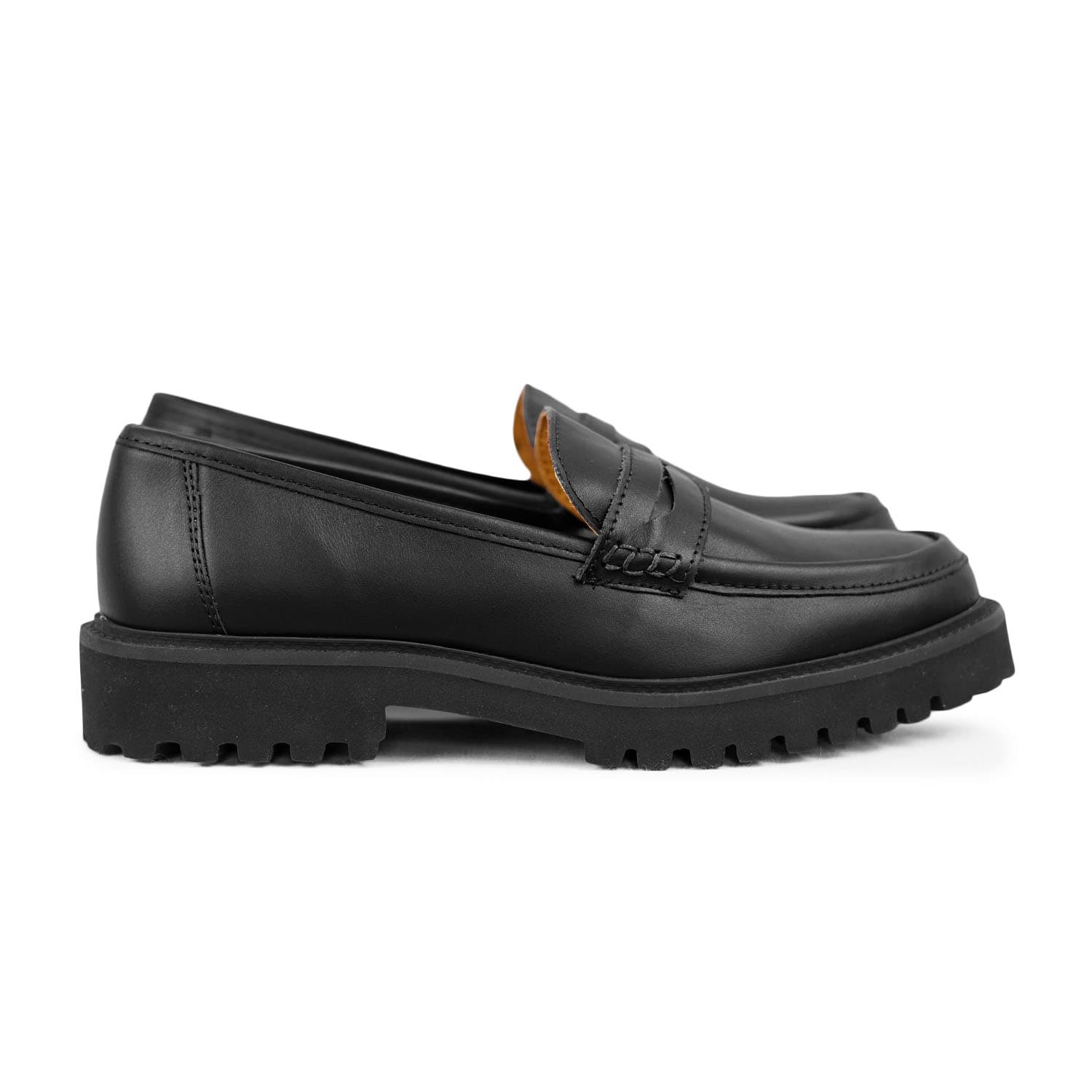
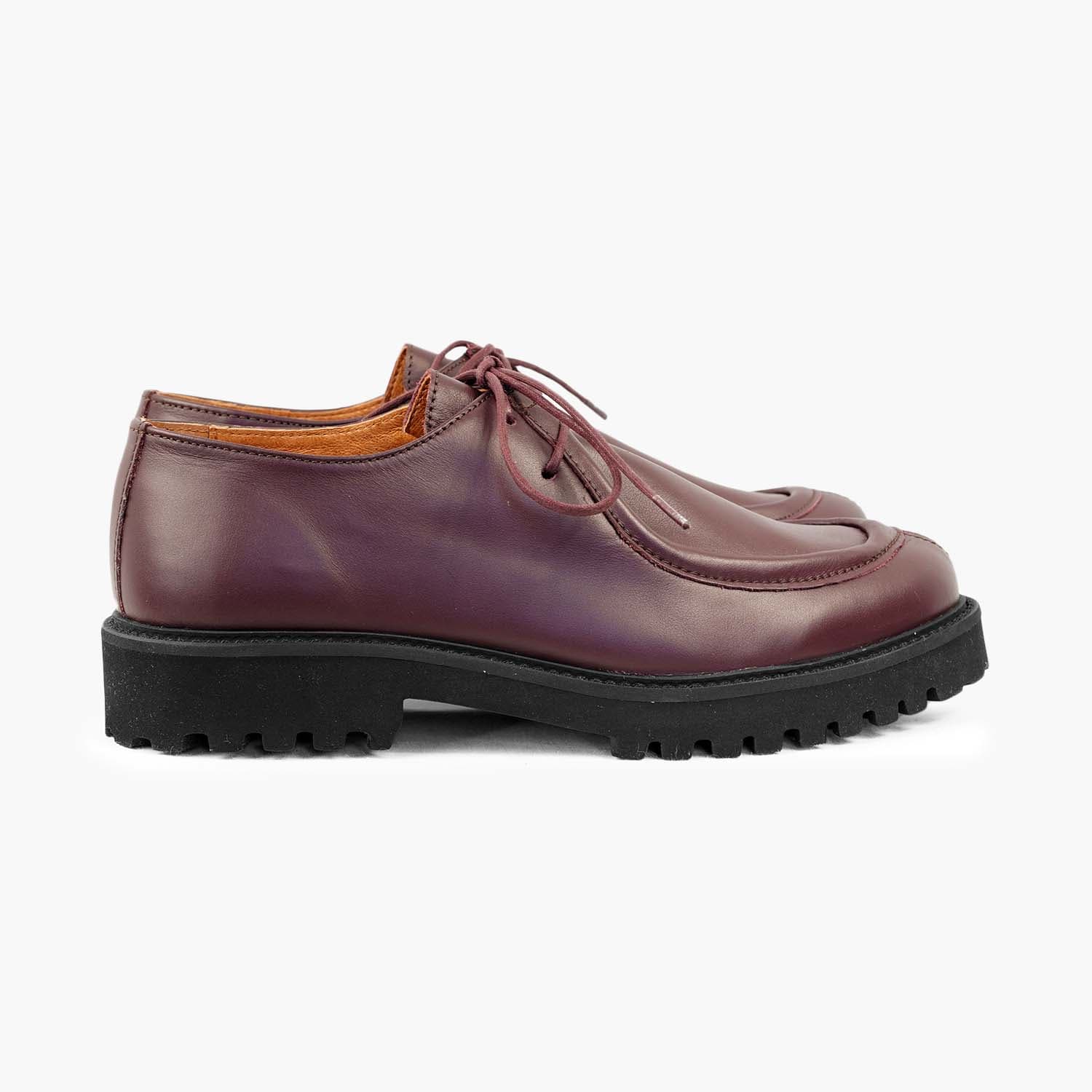
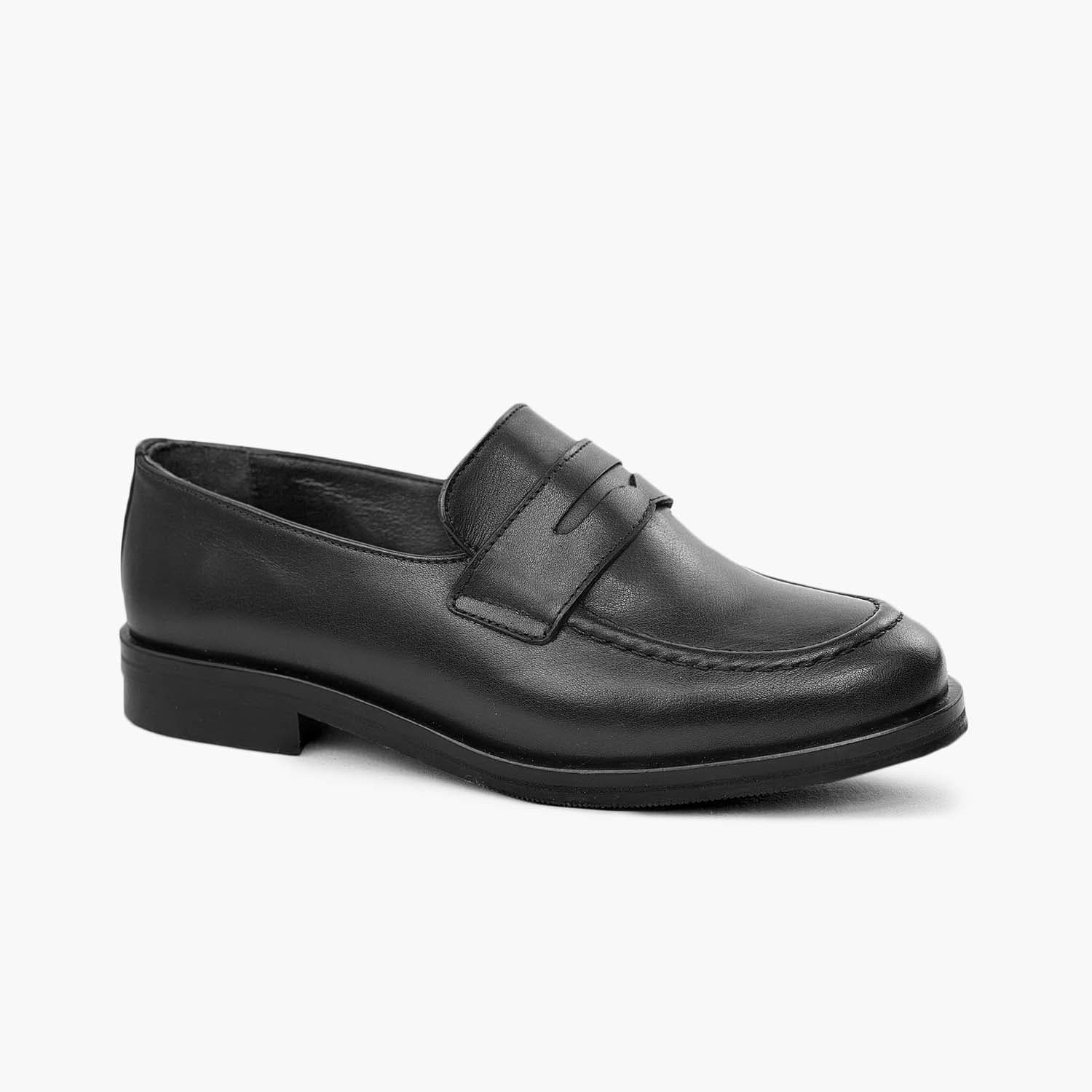
Our models tick these boxes for a simple reason: they are designed for prolonged standing on hard floors, with an SRC slip-resistant sole and full-grain leather that holds without squeezing. And the removable insole accommodates custom orthoses.
Orthotic insoles: the right reflex, at the right time
Custom orthoses prescribed by a podiatrist are one of the best-established treatments for plantar fasciitis: they support the arch and unload the painful insertion. Two practical conditions: a shoe with a removable insole so they fit without stealing volume, and a deep enough fit so the heel stays held.
The habits that speed up recovery
- Calf and sole stretches, morning and evening: the best-documented core treatment. Before putting your foot down in the morning, stretch the sole by gently pulling the toes towards you.
- Roll a ball or a frozen bottle under the arch for 5 minutes after service: massage and cold in one gesture.
- Temporarily reduce impact: avoid running and sprinted stairs, without stopping walking altogether.
- Alternate two pairs and replace shoes whose cushioning is dead: past their mileage, the foams no longer protect.
When to seek help
If pain persists beyond a few weeks despite these measures, see a podiatrist or your doctor: custom orthoses, physiotherapy, and in stubborn cases shockwave therapy or an injection. Plantar fasciitis heals in the vast majority of cases, but it is measured in weeks or months: the earlier it is managed, the shorter it is.
For employers: a classic among foot-related disorders
Plantar fasciitis is one of the conditions that settle silently into standing teams, right up to sick leave. The cost of one adapted pair compares to a single day of absence. Our argument is the same as for all equipment: a test pair for the colleague concerned, two weeks of real service, and the decision is made on lived experience, not a catalogue.
Frequently asked questions
Which shoes should I wear with plantar fasciitis when working standing?
A shoe with real arch support, a cushioned and slightly raised heel (2 to 3 cm), torsional stability and a removable insole for orthoses. Avoid completely flat shoes and any pair whose cushioning is worn out.
Are plantar fasciitis and a heel spur the same thing?
They are linked but not identical. The fasciitis is the painful inflammation of the fascia. The heel spur is a bony consequence of chronic traction, visible on X-ray, and is not the cause of the pain: you can have a spur without pain, and fasciitis without a spur.
How long does plantar fasciitis last?
From several weeks to several months. Recovery is faster when adapted footwear, daily calf and sole stretches, and orthoses (if prescribed) are combined early. Cases treated late can drag on beyond a year.
Can you keep working standing with plantar fasciitis?
In most cases yes, provided the equipment is adapted (cushioned shoes, orthoses) and the stretches are done. If every step stays painful despite these measures, seek medical advice to adjust treatment and possibly adapt the role temporarily.